A Farmers Guide to the GREET Model

May 2, 2024
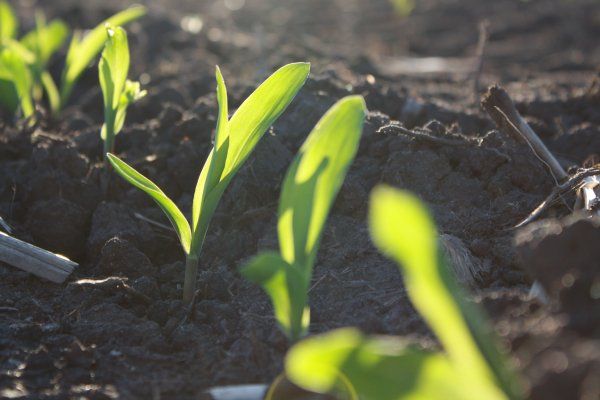
A close up of a plant growing out of the ground

The Department of Energy’s (DOE) Argonne National Laboratory’s GREET model is catching the eyes of not only airlines and policy gurus, but also midwestern corn farmers. The model is critical to corn-based ethanol’s pathway to the sustainable aviation fuel (SAF) market.


With many industries interested around the world, the model is making tidal waves for being loved by agriculture but frowned upon by the European airlines. Corn farmers should be invested in the GREET model and its impact on future markets. 

What is GREET?

The GREET (Greenhouse Gases, Regulated Emissions, and Energy Use in Technologies) model was created in 1995 as a tool to evaluate the lifecycle analysis of technologies or products. In the simplest terms, the model was created to calculate environmental impact. GREET is important in calculating the carbon scores of the transportation industry.

The DOE states GREET can calculate:

  • Total energy consumption (non-renewable and renewable) 
  • Fossil fuel energy use (petroleum, natural gas, coal)
  • Greenhouse gas emissions 
  • Air pollutant emissions 
  • Water consumption

In agriculture, GREET is critical to Renewable Fuel Standard, low carbon fuel standards and SAF production. 


Why don’t some people like GREET?

GREET accurately depicts agriculture’s carbon emissions. However, other models penalize agriculture claiming the industry has a large environmental footprint. Some international and state specific models were created for areas with less production farmland and punish agriculture for land use change emissions. Argonne National Laboratory updates the GREET model annually with the newest documented data. ICAO’s model (explained below) uses outdated information and penalizes corn for indirect land use that is not scientifically supported.


What is ICAO?

The International Civil Aviation Organization (ICAO) is a United Nations agency which helps 193 countries to cooperate together. In October 2016, the nations of the ICAO established the Carbon Offsetting and Reduction Scheme for International Aviation (CORSIA). CORSIA uses market-based environmental policy instruments to reduce CO2 emissions by requiring operators to purchase carbon offsets to cover their emissions above 2020 levels.


Why is GREET important now?

In 2022, the Inflation Reduction Act (IRA) included tax credits for SAF. The fuel could increase demand for corn if the SAF is produced from ethanol. The IRA’s 45Z tax credit requires feedstocks to meet a 50% reduction in greenhouse gas emissions. Without the ability of the GREET model to accurately calculate ethanol’s GHG emissions, agriculture would be excluded from the credit and SAF production.


Why should farmers care?

SAF could open unprecedented demand for corn. In 2005, the Renewable Fuel Standard created a growth in ethanol demand and increased the need for corn. In 2021, the Biden Administration announced the goal of increasing SAF production to three billion gallons by 2030. The sustainable aviation fuel (SAF) industry is still in its infancy, but experts estimate SAF could generate $2,926MM economic impact in the state. 


Without expanding markets like SAF production, experts say corn farmers are projected to lose demand. The Environmental Protection Agency’s Multipollutant Emissions Standards would require by 2032, 56% of light duty vehicles sold be plug-in -electric and 13% hybrid electric vehicles. National Corn Growers Association Lead Economist Krista Swanson said the rule will create an annual loss of more than one-billion bushels of corn by 2041.


It is critical the GREET model remains the standard modeling system analyzing ethanol’s lifecycle emissions. The U.S. Department of Treasury must support GREET while maintaining its accuracy and transparency for measuring the carbon intensity of corn as a feedstock for SAF.


kate baker
By Rosie Trump & Tara Desmond January 6, 2026
Precision Conservation Management expands into southeastern Illinois with conservation specialist Kate Baker, offering free, data-driven insights for farmers.
By Tara Desmond January 6, 2026
The IL Corn Growers Association recently honored longtime colleague and friend Dave Loos in a way that reflected what mattered most to him: education, curiosity, and investing in the next generation. Dave dedicated decades of his career to advancing Illinois agriculture and the ethanol industry, first with the State of Illinois and later through more than 17 years at IL Corn. He was widely respected for his deep knowledge of biofuels, his passion for learning, and his ability to build lasting relationships across the agriculture and energy sectors. To honor Dave’s legacy, the IL Corn Board of Directors established education scholarship funds for his grandsons. Partners and friends from across the ethanol industry, state and national corn organizations, and policy circles in Illinois and Washington, D.C., came together to contribute. During IL Corn’s annual meeting, Dave’s family was invited to the stage and surprised with the presentation of multiple scholarship checks. Speakers shared personal stories highlighting Dave’s commitment to learning, leadership, and service. Dave’s family expressed heartfelt gratitude, noting that while he would have been deeply appreciative, he also would have been characteristically humble about the recognition. These scholarships serve as a lasting tribute to Dave Loos—honoring his lifelong dedication to education and ensuring his legacy continues through the next generation.
By Tara Desmond January 6, 2026
State-Level Advocacy: Tariff Hearing & Executive Order Signing House Agriculture Chair Sonya Harper (D-Chicago) held a subject matter hearing on the impact of tariffs on Illinois’ farm economy, where IL Corn’s Director of Exports and Logistics, Collin Watters, testified alongside other commodity leaders and the Illinois Department of Agriculture. ICGA also attended Governor Pritzker’s signing of Executive Order 2025-07 on a Taylorville farm—an acknowledgment of the multi-year economic strain caused by trade disruptions, falling demand, and high input costs. National Recognition as Expert Voices This fall, ICGA staff and farmer leaders were featured speakers across major national and regional conferences, underscoring ICGA’s role as a leading voice on sustainability, biofuels, and farmer economics. ICGA participated in panels elevating Illinois corn farmers in national policy and climate-smart agriculture discussions. Organizational Momentum at the ICGA Annual Meeting New officers and directors were elected for 2025–2026, and ICGA honored leaders through the World of Corn Award and Media Award—reinforcing the organization’s strength, credibility, and member-driven leadership. 
By Tara Desmond January 6, 2026
Major Presence at the Illinois State Fair ICGA had a strong, visible presence throughout the Illinois State Fair, engaging with members, partners, and lawmakers. During Fair Week, ICGA staff and farmer leaders met with numerous Illinois state legislators to build relationships and discuss key state-level priorities such as regulatory certainty, rural economic development, infrastructure needs, conservation cost-share programs, and the importance of keeping agriculture competitive in Illinois. Farm Progress Show Engagement August also included significant outreach at the Farm Progress Show, where ICGA directors and staff met with farmers, industry partners, and policymakers. Conversations centered on conservation programs, ethanol demand, ag workforce needs, and the farm financial outlook — reinforcing ICGA’s work across policy, market development, and conservation adoption. Preparation for Fall Session Heading into the fall, the policy team continued its groundwork for Springfield’s veto session and maintained federal conversations. IL Corn Testifies on Urgent Need for Mississippi River Infrastructure Upgrades ICGA farmer leader Mark Bunselmeyer testified before the Mississippi River Commission, urging federal leaders to accelerate long-delayed upgrades to Lock 25 and the broader NESP system. He emphasized that nearly half of Illinois corn depends on the river, and decades of farmer advocacy and investment have been met with stalled progress and soaring project costs. Mark called for consistent funding, streamlined Corps processes, and greater input from river users to ensure a modern, reliable waterway system that Illinois farm families and the national economy depend on.
By Tara Desmond January 6, 2026
Building Future Advocates: ICGA + FFA in Washington, D.C. ICGA remains committed to a mission to Washington, DC with Illinois FFA leaders, helping the next generation understand federal policy and giving students firsthand experience meeting lawmakers, agency staff, and national ag partners. This ongoing partnership strengthens future advocacy capacity and ensures young agricultural voices are heard in D.C. Infrastructure & Export Advocacy ICGA maintained steady pressure on Congress and federal agencies to fund locks and dams modernization—critical to Illinois’ export competitiveness and the nearly half of Illinois corn that relies on the river system. Summer Member & Legislator Outreach Throughout June and July, ICGA continued on-farm visits, district meetings, and summer ag events, deepening relationships with legislators and reinforcing the challenges of the current farm financial environment. 
By Tara Desmond January 6, 2026
Legislative Ag Day in Springfield ICGA showed strong visibility at Ag Legislative Day, meeting directly with lawmakers and highlighting priorities like E15 expansion, lock & dam funding, property taxes, and conservation incentives. The event strengthened relationships with both new and veteran legislators. Megan Dwyer Testifies in Washington, D.C. Director of Conservation & Nutrient Stewardship for IL Corn (Megan Dwyer) delivered federal testimony to the Senate Agriculture Committee on conservation economics and voluntary, incentive-based programs—sharing real farmer examples and reinforcing ICGA’s credibility in national policy discussions. On-Farm Legislative Visits ICGA hosted spring farm visits to give lawmakers a firsthand look at cover crops, strip-till, nitrogen tools, and rural infrastructure needs. These visits remain one of ICGA’s most effective tools for connecting policy to real farm impact. Ongoing Springfield Engagement Throughout session, ICGA maintained regular contact with legislators on key issues including ethanol, property taxes, waterway infrastructure, and rural broadband. 
Show More