Q: How did you go from “this is a cool idea” to “we can actually build a company around this”?
A: Once we proved that PLA- polylactic acid made from U.S. corn—could perform at MERV-rated levels, the business case became stronger. We tested prototypes, partnered with material scientists, and validated that a corn-based filter could meet airflow and performance standards. Winning the National Corn Growers Association’s Consider Corn Challenge V confirmed two things: the science works, and the agricultural community is eager for new value-added uses of corn.
Q: Give us the simple version - how does the Aerterra corn-based filter actually work?
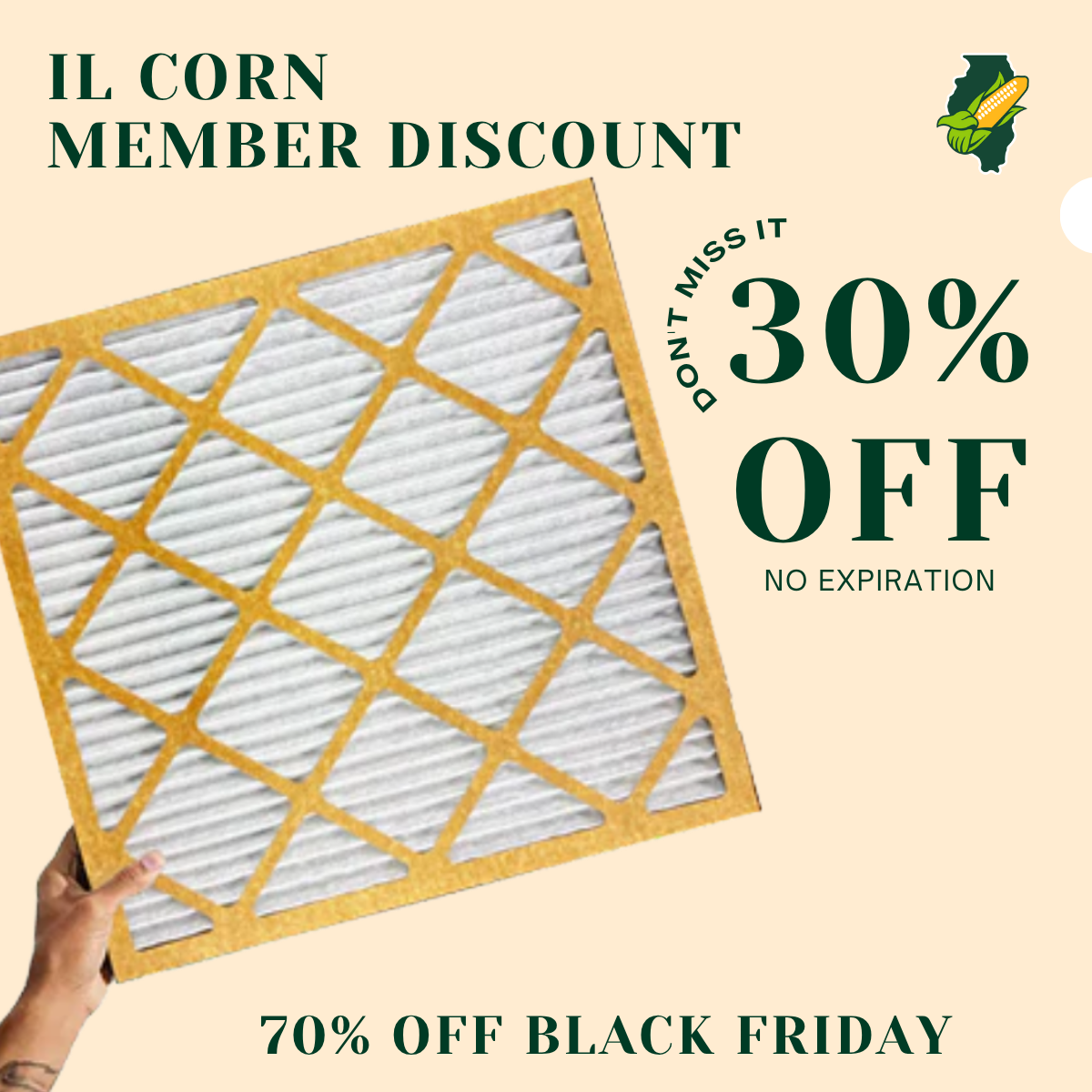
A: Think of it like a high-performance mesh made from ultra-fine corn-based fibers. Air flows through the filter, dust and airborne particles get captured in the fiber structure, and clean air passes into your home. We meet the same standards as traditional filters- you just get cleaner air without the petroleum or hazardous materials.
Q: What makes your filter different from the standard filters people are used to buying?
A: Aerterra filters are:
- Bio-based instead of petroleum-based
- PFAS-free and free of harsh chemical binders
- Made from U.S. corn, supporting American agriculture
- Designed with lower embodied carbon vs. synthetic filters
- Built with a premium airflow structure that maximizes HVAC efficiency
In short: same performance, healthier materials, better for the planet.
Q: How does corn impact performance—airflow, filtration quality, sustainability?
A: Corn-derived bio-polymers can deliver the same filtration performance as petroleum-based synthetic fibers or micro-fiberglass fibers, and our corn-based nano-fiber structures at higher efficiency levels lock in that performance over time, whereas some synthetic filters rely on electrostatic charge that may degrade over time. Unlike typical synthetic or glass-based materials, our materials are fully renewable, have a lower carbon footprint, and are more likely to break down naturally.
Q: What has been the most challenging part of launching a startup in the materials/consumer products world?
A: Everything takes longer than you think- materials testing, manufacturing scale-up, packaging, certifications, logistics. When you rethink the material itself, you’re not just competing with the category… you’re rewriting it. But the reward is huge: once people understand what we’re doing, the mission sells itself.
Q: If everything goes perfectly, how big can Aerterra get?
A: Enormous. Every home, apartment, office, school, farm, and data center needs air filtration. It’s a multi-billion-dollar category that has barely changed in decades. We believe Aerterra can become the leading bio-based clean-air brand, expanding from filters into a full portfolio of “Corn-Based Clean Living” products. We’re just getting started.
Q: If Aerterra had a mascot… would it be a corncob with a cape, or do you have something better in mind?
A: We haven’t officially decided yet. A corncob with a cape could be interesting but we will let the community help us decide as the brand grows.
As Aerterra grows, the company sees opportunity not just in reinventing the furnace filter, but in reshaping what everyday household goods can look like when they’re built on renewable, American-grown materials. From performance to sustainability to a bit of fun (yes, we ask about mascots), this is a corn innovation story worth watching.