

What is Octane and Why is Octane Important for Increased Efficiency and Lower Emissions

July 18, 2023
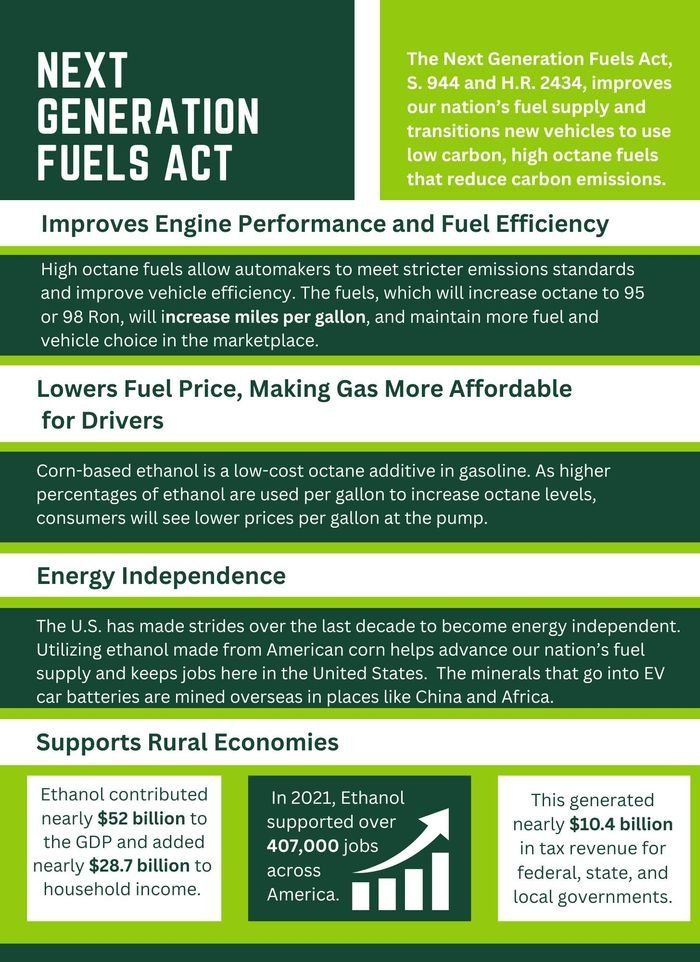
The next generation fuels act improves engine performance and fuel efficiency

What is Octane?

A gasoline octane rating measures the fuel’s ability to resist auto-ignition (combustion of the air: fuel mixture before desired). Auto ignition can cause noise in the engine and, in some cases, harm the engine. These issues are what makes octane rating among the most important properties of gasoline. A higher octane-rating resists auto-ignition and permits engine designers to make more efficient and more powerful engines.


Importance for increased efficiency and lower emissions

Increasing the octane rating of gasoline allows for improved engine efficiency, fuel consumption, and decreased greenhouse gas emissions by allowing higher compression ratios and other efficient power plant designs, such as downsizing, down speeding, cylinder deactivation and hybridization. Octane rating has become the most limiting factor in achieving new efficiency and environmental objectives for gasoline powered vehicles. When America designs a fleet around a higher-octane standard, it will result in fleet-wide energy efficiency improvements, lower harmful emissions, lower greenhouse gas emissions and better performance.

Legislation that supports Octane


Next Generation Fuels Act – In the 117th Congress, the legislation was introduced in both House and Senate, gaining more than 30 bi-partisan co-sponsors. In the 118th Congress, the legislation was reintroduced in both House and Senate. The legislation establishes a new minimum research octane rating (RON) standard of 95 beginning in 2028 for automakers to design around. While the certification fuel has increased ethanol level, the Act doesn’t dictate how regulated parties must achieve higher octane and lower carbon requirements, but simply sets the standard for higher octane and low carbon. The reintroduction of this legislation in both the House and Senate gives liquid fuels the opportunity to increase fuel efficiency while reducing tailpipe emissions.


Learn More about Ethanol

Steve Koeller, Justin Moore, Shane Gray, Rep. Katie Stuart, Chad Dillenberger, and Dale Haudrich
By Lyndi Allen April 8, 2026
Representative Katie Stuart and Illinois farmers visited NCERC for a tour, to learn about its expansion plans, and interview Illinois farmers
thumbnail from farmdoc webinar
By Tara Desmond April 8, 2026
Researchers reveal most farmers operate from a single, highly consistent production plan and change it far less often than conservation advisors typically assume.
thumbnail of different videos
By Tara Desmond April 8, 2026
Catch up on IL Corn’s top stories and videos from Q1 2026, featuring farmers, yields, policy updates, and must-see moments from the field.
Shane and Marty
By Tara Desmond April 8, 2026
Farmer and past ICGA President Marty Marr shares insights on policy, conservation, and leadership and why staying involved matters in agriculture.
Randy thumbnail
By Tara Desmond April 2, 2026
An Illinois farmer shares lessons from 30 years of no-till, concerns about profitability, and opportunities for new corn demand in evolving markets.
Jared and his father
By Tara Desmond April 2, 2026
Illinois farmer Jared shares how 168 lbs of nitrogen produced 308 bu/acre and why cutting rates outperformed a high-input field by $200/acre.
Show More